October 7 and the awakening of global conscience
TEHRAN – Contemporary Palestinian history should be read in two chapters: before October 7, 2023, and after it.
That date not only shook the geography of the conflict; it upended the balance of power, the media landscape, and global public opinion, transforming Palestine into an unmistakably humanitarian cause that transcends borders, identities, and affiliations.
The international community has not forgotten the days when the Israeli regime’s narrative dominated Western media, while other accounts were sidelined and pushed to the margins.
Close ties with to Tel Aviv was considered a valuable political asset for many candidates in Western elections.
In fact, some Western public figures faced censorship or other punitive measures for their anti-Zionist stance, usually under the guise of combating antisemitism. Despite having no antisemitic intent, they ultimately suffered painful personal consequences, raising profound questions about freedom of expression.
But following Operation Al-Aqsa Flood and the devastating genocidal war on Gaza, a political earthquake shook the global conscience. This time, cracks appeared in the dominant Western narrative.
Today, unconditional solidarity with the Zionist regime no longer guarantees political popularity or electoral success.
On the contrary, it has sometimes become a heavy electoral liability. Trump, seeking to win American voters, has spoken of ending Washington’s annual aid to the regime.
Calls to reassess the relationship with Tel Aviv are also gaining ground in American political circles, including discussions surrounding the positions of senior officials.
Meanwhile, Jean-Luc Mélenchon, one of the leading figures of the French left and a presidential contender, goes even further, speaking about deploying the French navy to protect humanitarian aid convoys heading to Gaza.
Terms like “genocide” and “apartheid” moved from the activist fringe into mainstream political discourse. The UK Green Party won a parliamentary seat in a traditional Labour stronghold by campaigning explicitly on Gaza as a genocide, while French leftist parties demanding sanctions saw electoral gains.
In Berlin, the Palestinian flag flew, even if only for an hour, outside the Reichstag (the German parliament), in place of the German unity flag.
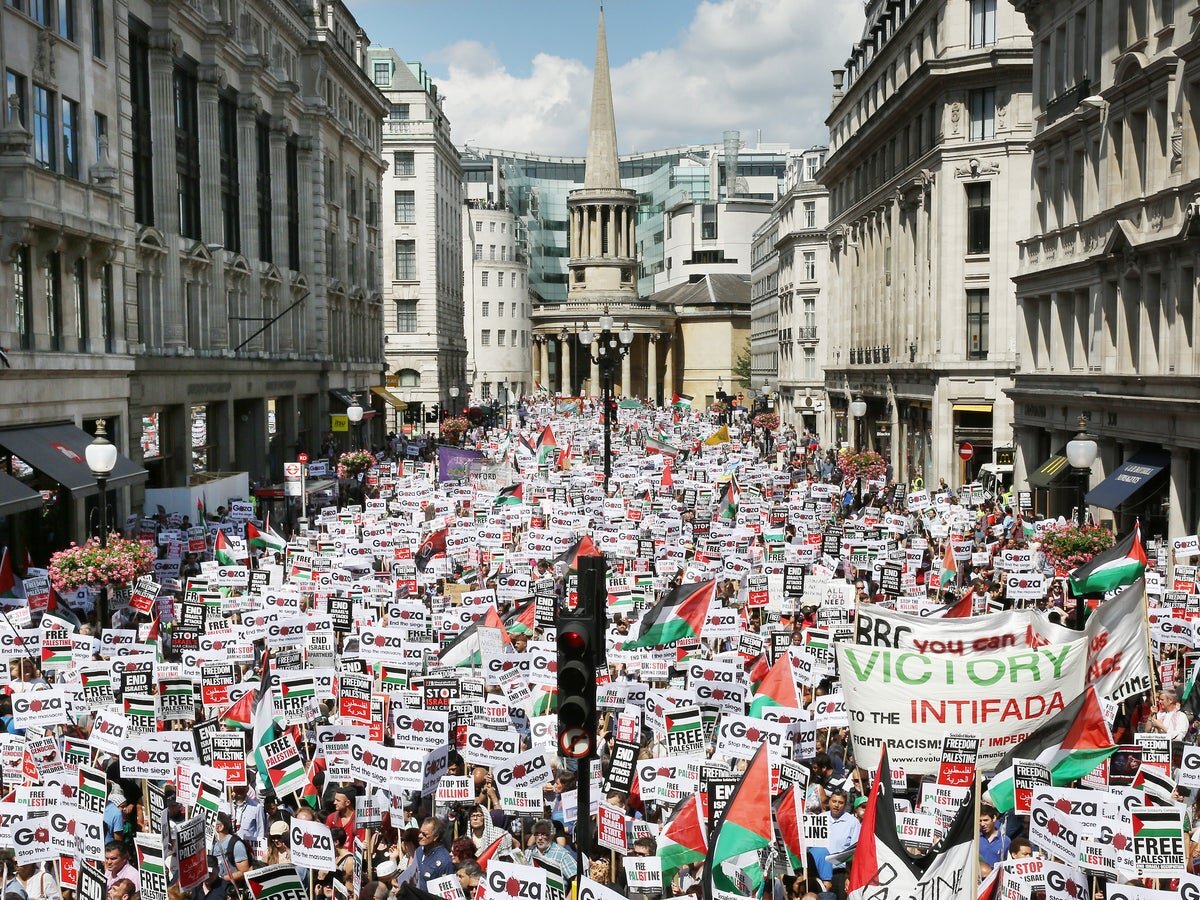
At Western universities, young people are breaking through the wall of silence. In the streets of London and Paris, chants demanding justice are growing louder. And in international human rights forums, questions about responsibility for the genocide and the suffering of civilians are becoming increasingly urgent.
A structural shift is occurring where younger Westerners are more moved by real-time images of Gaza than by Holocaust memory as a moral guide. This “image discipline” is replacing the post-war “memory discipline,” weakening the automatic deference to Zionist narratives that defined previous generations.
In another equally telling development, more than a million European citizens have signed a petition calling for the full suspension of the EU-Israel Association Agreement, amid growing public demands for an end to arms supplies to the Israeli regime.
The number of verified signatures has exceeded 1.1 million, bringing the initiative before the European Commission. It is a striking illustration of how public protest is moving beyond the streets and into the institutions.
The repeated Global Sumud Flotilla attempts to break the siege of Gaza, and the viral images of them being attacked by drones, kept the humanitarian crisis in the global spotlight. This grassroots mobilization sustained pressure on governments and created a visual counter-narrative to the Israeli regime’s military claims.
More remarkably still, the aftershocks of this earthquake have reached the corridors of justice in The Hague.
The International Criminal Court (ICC) has issued arrest warrants for Netanyahu and former war minister Yoav Gallant on charges of war crimes and crimes against humanity, while the International Court of Justice (ICJ) has ordered the Zionist regime to take binding measures to protect Palestinians.
Officials who were once welcomed with full diplomatic honors now face the prospect of prosecution.
There are even mounting reports of prominent regime figures wearing masks to conceal their identities, while the faces and names of military personnel are being kept under wraps for fear of recognition and possible arrest during overseas travel.
It is a powerful symbolic image of how the balance between immunity and accountability is shifting.
For the first time, Gallup polling in February 2026 showed that the majority of Americans sympathize more with Palestinians than with Israeli settlers. This marks a major break from decades of pro-regime sentiment, particularly pronounced among younger age groups.
These transformations cannot compensate for the immense suffering of the victims or rebuild the devastated Gaza Strip. But they do reveal that the monopoly on the narrative has begun crumbling.
Perhaps the biggest aftershock of October 7 is not being felt on the battlefields, but in the awakening of consciences that can no longer accept seeing the truth solely through the lens of power.
A profound awakening is taking shape in global consciousness: one in which Palestine is no longer just the name of a land, but has become a defining test of humanity’s conscience.
This is one of the deepest consequences of the October 7 earthquake, whose aftershocks continue to reverberate and may yet rewrite chapters of history that have not been written.
A big awakening of the human conscience is on the horizon, and history has yet to write the final chapter.
Leave a Comment